Less traffic
The Metro B Line was recently ranked the
best line in the LA Metro system, and it deserves that recognition. It's fully underground, which means no stoplights, no street-level slowdowns, and minimal delays.
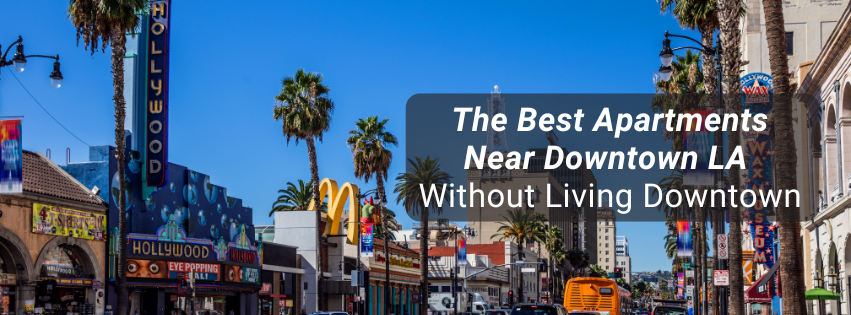
Three stations sit directly under Hollywood Boulevard: Hollywood/Highland, Hollywood/Vine, and Hollywood/Western. From any of them, you can reach 7th Street/Metro Center in DTLA in about 15 to 20 minutes.
Need to get to Koreatown or Mid-Wilshire? Transfer to the D Line at Wilshire/Vermont. That connection also opens up the
three new stations at La Brea, Fairfax, and La Cienega that opened in May 2026, extending the line into Beverly Hills. For renters heading north, Universal City is about 5 minutes, and North Hollywood is roughly 10.
The B Line runs every 10 minutes or so during most of the day. Metro has also been rolling out refurbished subway cars and adding more security and cleaning staff to stations, which has noticeably improved the experience compared to a few years ago. If you're weighing Hollywood against other neighborhoods for commuting, our
breakdown of apartments near downtown LA explains how Hollywood, Koreatown, and Silver Lake all connect to DTLA.
More money in your pocket
An
LA Transit Access Pass (TAP) card
costs $1.75 per ride. Compare that to gas, parking fees, insurance, wear, and the general headache of sitting on the 101 during rush hour. Renters who use the B Line as their primary commute can consistently save hundreds of dollars a month.
That money goes a lot further toward rent, food, and going out. LA isn’t cheap, so most renters will appreciate that.
Even if you still own a car (more on this below), having Metro as your weekday commute option means fewer miles, fewer oil changes, and a lot less stress. It turns a car from a daily necessity into a convenience. We covered more of the financial and lifestyle perks of going car-free in
our guide to public transportation in Los Angeles.
Walkable amenities
Central Hollywood holds a
95 Walk Score, making it the most walkable neighborhood in Los Angeles. That's higher than DTLA (94) and well above most other neighborhoods in the city. Groceries, coffee, restaurants, gyms, and nightlife are all accessible on foot between Metro stations.
This is one of the reasons car-optional living is realistic here. Since you’re close to transit, you're also close to everything else you'd need on a daily basis, too. The combination of Metro access and walkability is something most LA neighborhoods can't offer at the same time. We wrote more about why that matters in our piece on
the advantages of living in Hollywood.
What If You Do Have a Car?
Again, Hollywood is car-optional. However, car owners can still enjoy the perks of living near the freeway, as long as they find parking.
The neighborhood sits right next to the 101 Freeway, and most residents say they can reach an on-ramp in under 10 minutes. From there, Burbank and the studio lots are 15 to 25 minutes north. DTLA is 20 to 45 minutes south, depending on traffic. The 2 Freeway is also nearby, connecting you to Glendale and Pasadena in about 15 to 20 minutes.
For West Hollywood and Mid-Wilshire, you don't even need a freeway. Surface streets get you there in 10 to 15 minutes. And here's a local tip: when Google Maps suggests a freeway route during rush hour, check the bike route overlay instead. It'll show you quieter surface streets that are often faster than sitting in stop-and-go traffic on the 101.
Some things to consider
One thing that separates Hollywood from neighborhoods like West Hollywood is that WeHo has no direct freeway or Metro access at all. Residents there describe it as a "freeway island" where getting anywhere outside the neighborhood means crawling along surface streets for 15 to 20 minutes before hitting an on-ramp.
Hollywood doesn't have that issue. You get the walkability and the nightlife, but you also get an escape route when you need one. Another thing - parking is the one thing to plan for. Street parking in Hollywood can be competitive, especially near the busier commercial strips.
The smartest move is to look for apartments that include a gated or assigned spot in the lease. Although we strive to provide our renters with every amenity possible, even most of our apartments do not offer on-site parking. That’s how hard it is to secure a spot.
Hollywood Apartments Matching Your Commute
Not every Hollywood apartment is equally connected. Where your building sits relative to a Metro station or freeway on-ramp can make the difference between a 15-minute commute and a 45-minute one.
Here are three Urban LA Living buildings that each solve a different commute pattern.
Silverlake Station